After ten years and countless setbacks, scientists who completed the world's first synthetic yeast genome have published a troubleshooting guide for building life from scratch.
Leading synthetic biologists have shared hard-won lessons from their decade-long quest to build the world's first synthetic eukaryotic genome in a Nature Biotechnology paper out today. Their insights could accelerate development of the next generation of engineered organisms, from climate-resilient crops to custom-built cell factories.
"We've assembled a comprehensive overview of the literature on how to build a life form where we review what went right – but also what went wrong," says Dr Paige Erpf, lead author of the paper and postdoctoral researcher at Macquarie University's School of Natural Sciences and the Australian Research Council (ARC) Centre of Excellence in Synthetic Biology.
The Synthetic Yeast Genome Project (Sc2.0) involved a large, evolving global consortium of 200-plus researchers from more than ten institutions, who jointly set out to redesign and chemically synthesise all 16 chromosomes of baker's yeast from scratch. Macquarie University contributed to the synthesis of two of these chromosomes, comprising around 12 per cent of the project overall.
Distinguished Professor Ian Paulsen, director of the ARC Centre of Excellence in Synthetic Biology at Macquarie, says: “Our centre is now at the forefront of applying these insights to engineer organisms that address real-world challenges, whether that’s in sustainable manufacturing to food security.”
Despite standardised design principles, every research team encountered similar problems. The paper catalogues these 'bugs' systematically, offering future synthetic biologists a roadmap of what to avoid.
Tiny DNA watermarks, designed to be silent, occasionally disrupted gene function in unexpected ways. Some genes flagged as non-essential turned out to cause significant growth problems when removed.
Dr Hugh Goold led work on synXVI, one of Macquarie’s synthetic chromosomes, for the NSW Department of Primary Industries and Regional Development. He says, “The hardest challenges were both psychological and technical: the long haul of a decade-long project where progress could feel painfully slow, and the difficulty of working with cells that were unfit and difficult to grow.”
Article in Lighthouse https://lighthouse.mq.edu.au/article/december-2025/hitchhikers-guide-to-building-life-from-the-genome-up
Research: Erpf, P.E., Meier, F., Walker, R.S.K. et al. (2025) Building synthetic chromosomes one yeast at a time: insights from Sc2.0. Nat Biotechnol 43, 1911–1918. https://doi.org/10.1038/s41587-025-02913-4
Flying fox carers join Macquarie scientists to tackle superbugs, by Fran Molloy
Macquarie University researchers are working with Australia's largest wildlife rescue organisation to improve biosecurity for flying foxes, after finding that antibiotic-resistant "superbugs" originating from humans are spreading across vulnerable populations.
https://lighthouse.mq.edu.au/article/december-2025/flying-fox-carers-join-macquarie-scientists-to-tackle-superbugs
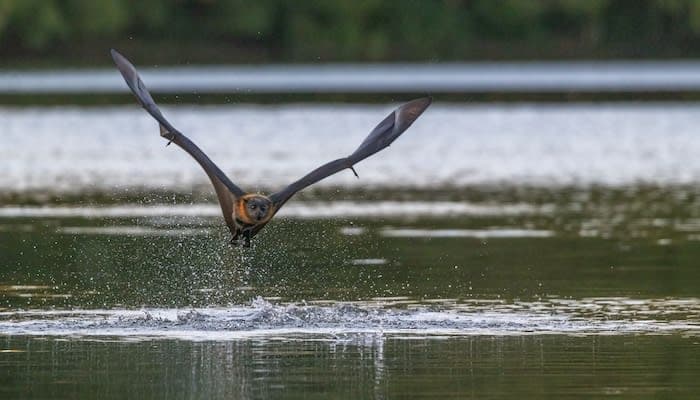
Thousands of baby flying foxes are rescued across Australia each summer after heat stress events, habitat loss and other human impacts leave them orphaned. Volunteers often hand-feed them every few hours for months at a time. But new research shows that human pollution in the environment may also be exposing these vulnerable animals to antibiotic-resistant bacteria.
A partnership between Macquarie University scientists and WIRES has uncovered worrying levels of resistance among rescued pups and developed practical solutions to protect both wildlife and carers from infection. The study focused on the grey-headed flying fox – critical native pollinators now listed as vulnerable. Over two and a half years, researchers collected more than 570 samples from orphaned flying fox pups in care.
They found almost one in three pups carried E. coli strains resistant to common antibiotics, and around one in 10 harboured bacteria that no longer respond to multiple drugs. Genomic sequencing showed that many of these strains closely match those found in human infections. “The bacteria we’re finding in these animals evolved in humans or domestic animals,” says Dr Fiona McDougall, a Research Fellow at Macquarie’s School of Natural Sciences. “It’s confronting to realise that we’re effectively polluting the environment with microbes that then spill over into wildlife.” The infection pathway likely begins in water contaminated by human or animal waste. Adult flying foxes ‘belly-dip’ to drink – skimming the surface and licking water off their fur – while their babies cling to them, directly exposing pups to any bacteria in the water. “Wildlife carers give extraordinary amounts of their time, energy and even their homes to these animals,” says Professor Michelle Power, who leads Macquarie’s Wildlife Health and Disease team. “Our goal is to make their work safer and more effective, using evidence-based strategies that can be applied globally.”
The collaboration has led to new biosecurity guidelines for wildlife rehabilitation, including wearing masks while cleaning cages, washing hands between handling animals, using separate equipment for each enclosure and keeping domestic pets away from wildlife.
Article in Lighthouse: https://lighthouse.mq.edu.au/article/december-2025/flying-fox-carers-join-macquarie-scientists-to-tackle-superbugs
Research: McDougall, F., Boardman, W., & Power, M. (2022). High Prevalence of Beta-Lactam-Resistant Escherichia coli in South Australian Grey-Headed Flying Fox Pups (Pteropus poliocephalus). Microorganisms, 10(8), 1589. https://www.mdpi.com/2076-2607/10/8/1589
Apep's sting: student helps unlock mysteries of dying stars' deadly embrace
Macquarie astronomers used space and land telescopes to help unravel the mysteries of the APEP system where three massive stars are locked in a 190-year orbit, creating spectacular spirals of cosmic dust.
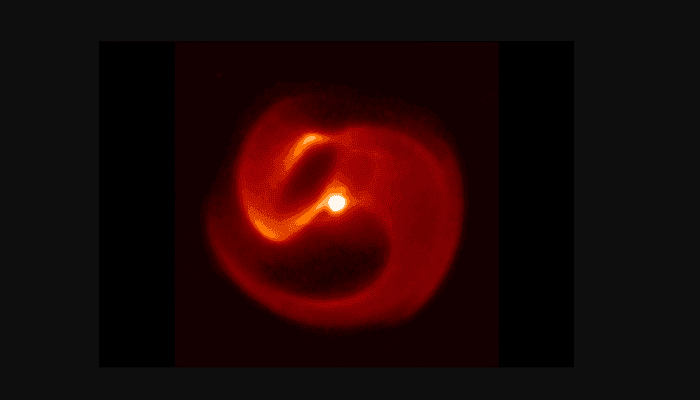
Using NASA's James Webb Space Telescope together with data from the ground-based Very Large Telescope in Chile, an international astronomy team has uncovered extraordinary images of a rare stellar system called Apep, showing four distinct dust shells spiralling outward from three massive stars locked in a cosmic dance.
Wolf-Rayet stars are a rare class of massive binary stars, where the earliest carbon in the universe is forged. The discovery helps astronomers understand how these stars interact and evolve over centuries.
Macquarie University Master of Research student Ryan White has refined the orbit of the Wolf-Rayet stars in the Apep system in a paper published this week in The Astrophysical Journal. He combined precise measurements of the ring location from Webb's image with the speed of the shells' expansion from observations taken by the VLT over eight years. The Webb image combined with several years of data from the European Southern Observatory’s Very Large Telescope (VLT) in Chile narrowed down how often the two Wolf-Rayet stars swing by one another: once every 190 years. Over each incredibly long orbit, the stars pass closely for 25 years and form dust.
"This is a one-of-a-kind system with an extremely long orbital period," White said. "The next longest orbit for a dusty Wolf-Rayet binary is about 30 years. Most have orbits between two and 10 years."
Webb observations also confirmed there are three stars gravitationally bound to one another in this system. The dust ejected by the two Wolf-Rayet stars is slashed by a third star, a massive supergiant, which carves a hole into each expanding cloud of dust from its wider orbit.
White's paper was published simultaneously in The Astrophysical Journal with another paper out of Caltech in Pasadena, California, with lead author Dr Yinuo Han.
Article in Lighthouse: https://lighthouse.mq.edu.au/article/november-2025/apeps-sting-macquarie-student-helps-unlock-mysteries-of-dying-stars-deadly-embrace
White, R. M. T., Pope, B. J. S., Tuthill, P. G., Han, Y., Dholakia, S., Lau, R. M., Callingham, J. R., & Richardson, N. D. (2025). The serpent eating its own tail: Dust destruction in the Apep colliding wind nebula. The Astrophysical Journal, 994(1), Article 121. https://iopscience.iop.org/article/10.3847/1538-4357/adfbe1
Climate inaction costing millions of lives, new report warns, by Fran Molloy
Co-authored by Macquarie University researchers, a new climate report warns that Australia's escalating heat, toxic air and fossil fuel dependence are driving a national health emergency.
https://lighthouse.mq.edu.au/article/november-2025/apeps-sting-macquarie-student-helps-unlock-mysteries-of-dying-stars-deadly-embrace
The 2025 Lancet Countdown on Health and Climate Change, released today, reveals a sobering truth: failure to act on climate change is taking an enormous toll on human health and wellbeing.
Macquarie University's Professor Paul Beggs, Director of the Lancet Countdown Oceania Regional Centre, is one of the international health and climate change authorities who co-authored the report.
"Without transformative action in the next few years, we will face a health catastrophe," Professor Beggs says. "The evidence is unambiguous: every year of climate inaction adds measurable burden to human suffering."
Australia is experiencing a dramatic surge in extreme heat exposure, with serious implications for worker health and the economy. In 2024, heat exposure resulted in the loss of approximately 175 million potential labour hours – 161 per cent more than the 1990-1999 annual average.
The construction sector bore the heaviest burden, accounting for 58 per cent of labour hours lost, translating into an estimated US$5.4 billion in lost income from reduced labour capacity due to extreme heat in 2024.
Bushfire smoke is particularly insidious, accounting for an annual average of approximately 250 deaths in Australia between 2020 and 2024. Air pollution, largely driven by fossil fuels, compounds these threats: more than 3400 deaths in 2022 were attributable to anthropogenic pollution.
"These are not abstract figures; they represent preventable deaths and unnecessary suffering," says Professor Beggs.
Article in Lighthouse: https://lighthouse.mq.edu.au/article/october-2025/climate-inaction-costing-millions-of-lives,-new-report-warns
Research: Romanello, Marina et al.(2025) The 2025 report of the Lancet Countdown on health and climate change: climate change action offers a lifeline The Lancet, Volume 406, Issue 10521, 2804 – 2857 https://lancetcountdown.org/2025-report
Macquarie technology powers breakthrough telescope in Chile by Fran Molloy
A robotic positioning system designed and built by Macquarie University engineers is now capturing light from thousands of stars and galaxies simultaneously at one of the world's premier observing sites.
An astronomical instrument featuring Australian-built technology has achieved first light – the crucial moment when a telescope captures its first images – at the European Southern Observatory's Paranal Observatory in Chile.
The 4MOST (4-metre Multi-Object Spectroscopic Telescope) facility uses an optical fibre positioning system built by Macquarie University's Australian Astronomical Optics (AAO), allowing the telescope to simultaneously observe thousands of celestial objects, from stars and planets to nebulae and black holes.
At the heart of 4MOST sits AESOP (Australian-European Southern Observatory Positioner), the robotic fibre positioning system designed and built by AAO. AESOP can position 2438 optical fibres with 10-micron accuracy (about 0.01 millimetres, or one-seventh the width of a human hair) in under one minute. Each fibre captures light from a different star, galaxy or other celestial object, feeding it to spectrographs that analyse the light in detail.
"AESOP is a major leap in precision robotics, delivering higher accuracy, tighter actuator density and faster configuration times than any previous fibre positioning system," says Distinguished Professor Jon Lawrence, head of instrumentation at AAO.
The technology represents an evolution from AAO's pioneering 2dF system developed in the 1980s. Where 2dF could capture 400 spectra at once, AESOP handles more than 2400 simultaneously.
Article in Lighthouse: https://lighthouse.mq.edu.au/article/october-2025/macquarie-technology-powers-breakthrough-telescope-in-chile
How humans reshaped the animal world by Fran Molloy
New fossil research shows how human impacts, particularly through the rise of agriculture and livestock, have disrupted natural mammal communities as profoundly as the Ice Age extinctions.
https://lighthouse.mq.edu.au/article/september-2026/how-humans-reshaped-the-animal-world
Fossil bones from six continents have revealed how people have fundamentally transformed mammal communities across the globe, according to new research that traces 50,000 years of animal history.
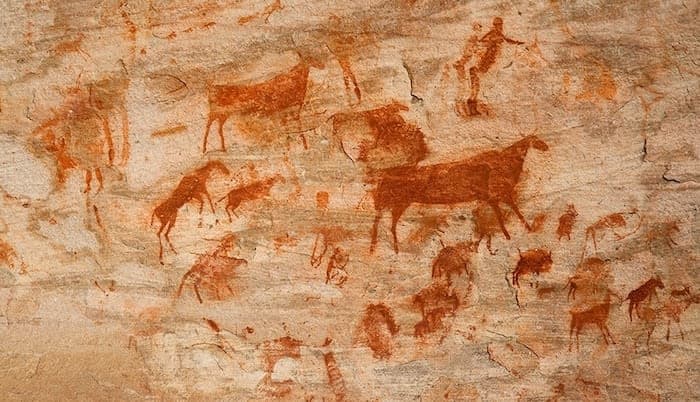
The international study, published in Biology Letters, shows that during the last Ice Age, mammal communities formed distinct patterns across continents based on natural climate zones and geographic barriers. But after farming began around 10,000 years ago, just a handful of livestock species spread along with humans and scrambled those natural boundaries forever.
"The study shows how agriculture and hunting combined as powerful global forces to reorganise ecosystems, which still creates conservation challenges today," says Associate Professor John Alroy from Macquarie University, a co-author on the study.
The researchers compared species lists from the last Ice Age with lists from the Holocene, our current epoch. During the Pleistocene, natural factors like climate gradients shaped the make-up of large mammal communities. But the Holocene brought dramatic changes to species distributions, directly linked to human development of agriculture and domestication of selected species of animals.
Examining archaeological records, the researchers found just 12 domesticated species – including cattle, sheep, pigs and horses – appeared in roughly half of the global sites studied, fundamentally altering the composition of animal communities.
Article in Lighthouse: https://lighthouse.mq.edu.au/article/september-2026/how-humans-reshaped-the-animal-world
Research: Brook, S. Kathleen Lyons, Benjamin E. Carter, William Gearty, Orlin S. Todorov, Zach Aandahl, John Alroy; Late Pleistocene faunal community patterns disrupted by Holocene human impacts. Biol Lett 1 August 2025; 21 (8): 20250151. https://doi.org/10.1098/rsbl.2025.0151